
Okta has listed Tariq Malik, the former head of NADRA, as one of the top 25 identity leaders in the world. The American cloud-based Identity and Access Management (IAM) platform is called Okta.
Okta Ventures, the company’s venture investing division, released a list. Because it is a “diverse compilation of forward-thinking developers, strategists, business leaders, and public servants.”
“The organisation is honouring the honourees for their unceasing efforts in software development, standards evolution, and strategy implementation to maintain the security and smoothness of digital transactions. Their work addressed some of the most urgent issues in the digital era,” he stated.
In Times Square, New York City, Mr Malik has been honoured with a Nasdaq billboard. It is in addition to the 24 other world leaders.
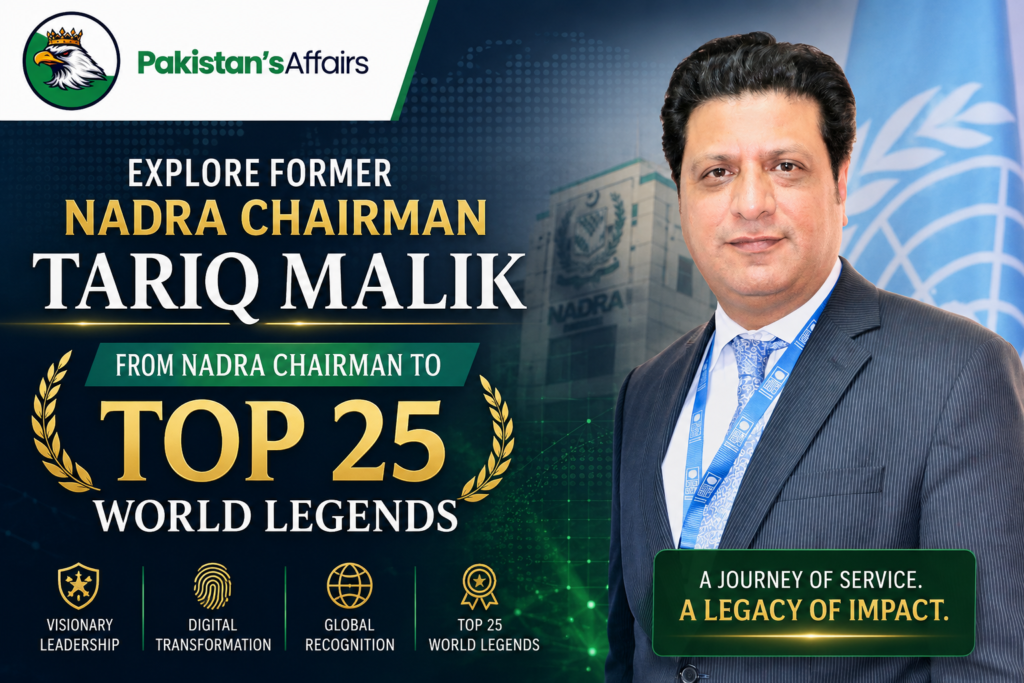
Tariq Malik – A Name That Redefined Digital Identity:
Who is Tariq Malik?
In a world where data and technology drive trust. A few names come to mind when it comes to converting domestic systems into international standards. One such person, of course, is Mr Tariq Malik. Mr Tariq Malik is a well-known figure and the former chairman of NADRA. He is putting Pakistan on the international map of innovative digital identities.
Greetings, brothers, esteemed elders, and friends! As you are aware, we are discussing the news, political affairs, trending topics, and the history of Pakistan. You may also view our last post on the big giants of the cement industry. Now let’s discuss the top cement brands!
From Domestic Leadership to International Acknowledgement:
Tariq Malik also served as the Chairman of the National Database and Registration Authority (NADRA). A proud department of Pakistan, where he played a critical role in modernising Pakistan’s identity infrastructure. Meanwhile, under his leadership, NADRA evolved into one of the most advanced national identity systems in the developing world.
He did not limit his work to administrative reform because he focused on secure digital identity systems and biometric verification, an area that now plays a central role in global digital governance, where it protects citizens’ data.
This effect was not overlooked.
Mr MAlik’s Vision:
“Digital identity succeeds or fails not on technology, but on whether its governance can withstand political pressure,” Malik stated in his featured interview.
He maintained that identification systems ought to be seen as essential components of governance. In order to maintain public trust, basic governance infrastructure promoted institutional independence, legal protections, and accountability.
Additionally, he emphasised three worldwide trends: verified credentials and passwordless authentication. Thus, governance that is machine-readable and directly incorporates consent and norms into systems. However, identification, data, and artificial intelligence came together to form a single layer of trust.
Among the World’s Top 25 Identity Leaders:
According to Okta, this list especially recognises the individuals for their contributions to:
- Advancing identity security technologies
- Developing innovative software systems
- Strengthening global digital infrastructure
- Ensuring secure and seamless digital transactions
This acknowledgement also placed the Ex-Chairman of NADRA, Mr Tariq Malik, alongside some of the most influential figures. These figures also shape the future of digital identity worldwide.
- Malik stated that adoption is dependent on “trust, utility, and governance,” drawing on his experience at Nadra.
- He pointed out that effective systems guarantee inclusive enrolment, provide value to citizens from the start, and provide obvious protections.
“Identity systems inevitably face resistance when they improve transparency or disrupt entrenched interests,” he stated. “Building institutional coalitions and anticipating this pushback are critical to durability.”
Mr Malik Transforming NADRA into a Global Model:
After serving his three-year tenure as Nadra chairman, Malik resigned in 2013. He is now a technical consultant for the Identification for Development (ID4D) initiative of the World Bank. Large-scale digital identification and digital public infrastructure initiatives in Africa, South Asia, and the Middle East have also benefited from his advice.
However, he previously worked for the United Nations Development Programme (UNDP) as the lead technical consultant on digital ID and digital governance.
Tariq Malik transformed NADRA into more than just a registration authority during his tenure. Therefore, it became a model for digital identity systems. That system is also known for:
- Secure national database management
- Biometric verification systems
- Efficient citizen registration processes
- Technological adaptability in governance
Mr Malik updated NADRA’s systems, which have often been studied and referenced. While other countries are looking to build or improve their own identity frameworks.
Why Mr Malik’s Recognition Matters to Pakistan:
The global recognition of Chairman NADRA Tariq Malik is not just a personal achievement. On the other hand, it reflects Pakistan’s growing role in the field of digital innovation.
Apolitical had already listed Mr Malik as one of the top 100 prominent figures in digital governance worldwide. Especially as One World Identity’s (OWI) top 100 digital influencers.
Additionally, they awarded him the Sitara-i-Imtiaz for strengthening governance via digital innovation and the “Outstanding Achievement Award” at the 2009 ID World International Congress in Italy.
It highlights how leadership like Mr Malik matters today. Especially when combined with technology and vision, it can transform anything:
- Strengthen national security
- Improve governance
- Enhance citizen services
- Contribute to global technological progress
This is an era where data is power, and trusted identity systems in the world. They are the foundation of digital economies.
My Personal Opinion- The Conclusion:
Tariq Malik’s journey from being a leading NADRA chairperson to gaining recognition among the world’s top identity leaders is not only a story of vision but also of execution and global impact in the digital world. It demonstrates how strategic leadership can transform national institutions into international benchmarks.
This is a digital age where we have already defined trust and security. But Mr Tariq Malik’s legacy proves that true leadership doesn’t just build systems! It builds global confidence.
